M Theory
Metacognition Theory



M Theory - Metacognition Theory is a concept that describes the way people understand themselves, their thinking processes, and how they perceive the world and other people. Its foundation is a model based on three domains: Feeling, Logic, and Belief.
M Theory is a descriptive concept intended to support a deeper understanding of human cognition and perception, rather than replace medical knowledge or clinical diagnosis.
M THEORY - MODEL
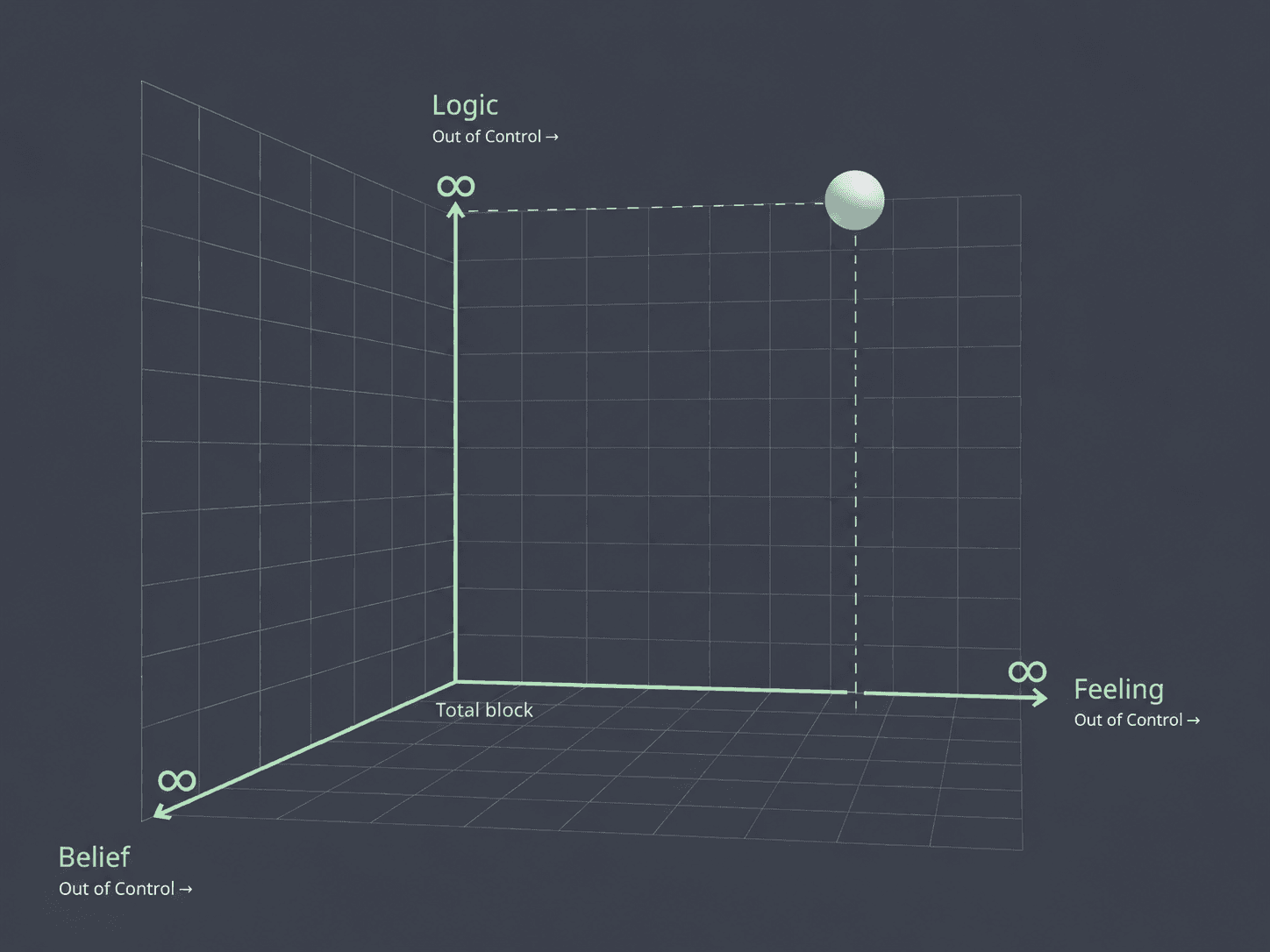
Hypothesis - M THEORY (METACOGNITION THEORY)
Every human being perceives the world through three areas:
- What is based on LOGIC
- What is based on FEELING
- What is based on BELIEF
Each of these areas (logic, feeling, belief) functions on a scale:
- 0 – represents a total block of a given area
- max – represents a level beyond our control
Conscious regulation of these areas allows a person to maintain balance, understood as an optimum state, inner peace, or a sense of happiness.
LOGIC
FEELING
BELIEF
Hypothesis - BALANCE
We all differ in the way we perceive and understand the world and ourselves. These differences result from the individual configuration of three areas: feeling, logic, and belief. In every person, these areas are developed in different proportions and influence the way we perceive, process, and act.
When all three areas - feeling, belief, and logic - remain within their optimal range, they create balance and support conscious perception of the world. They allow us to make decisions that are aligned with emotions, mind, and a sense of meaning.
Hypothesis - THE DOMINANT PROFILE
Every person possesses all three cognitive areas (feeling, logic, belief), which coexist in different proportions, creating a mixed profile. In practice, however, one of these areas is dominant and has the greatest influence on the way a person perceives, processes, and acts.